

Hydatid disease, a real public health problem
Prof. Karima Achour-Ameur
President of the Algerian Society of Hydroid Echinococcosis (SAEH)
President of the 27th Congress of the World Association of Echinococcosis (WAE)
Hydatid Disease (MH) commonly known as hydatid cyst or cystic echinococcosis is one of the most common zoonoses in the world. It is a plague involving the environment, animals and humans. It is a ubiquitous disease that can affect all the organs of the human body: liver, lung, bone, heart, vessels, brain, vertebral column, urinary tract …
Currently, in Algeria, the only therapeutic option for humans is surgery, while international recommendations, including those of the WHO recommend the addition of medical treatment to surgery to prevent recurrence. In animals, however, there is no real program to manage stray dogs causing this scourge and the animal vaccine is not available.
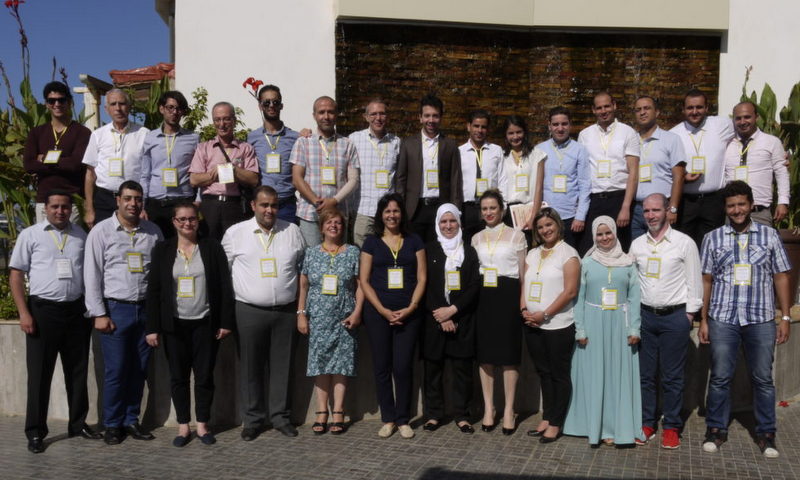
The Algerian Society of Hydroid Echinococcosis (SAEH) has organized its first national congress which has been coupled with the 27th Congress of the World Association of Echinococcosis (WAE). There were more than 150 eminent specialists from more than 30 countries, as well as representatives of the World Health Organization (WHO / WHO), the Pan American Health Organization (PAHO / PAHO), the Organization for Food and Agriculture (FAO), and the different working groups on echinococcosis.
The World Association of Echinococcosis (WAE) is a non-governmental organization (NGO) dedicated to the study and disclosure of all aspects related to echinococcosis, to fight against this disease globally by all scientific means. The WAE was founded in 1941, in Uruguay It should be noted that the first congress outside South America (Third Congress) was held in Algiers (Algeria) organized by the Prof. Dr. Henri Constantini, in 1951. Since then, 23 other congresses have taken place. In 1981, celebrating the 40th anniversary of the WAE, the 12th Congress was held again in Algiers (Algeria). Its president was Prof. Dr. Bachir Mentouri .. Finally, in 2017, the Congress (XXVII) returned for the third time in Algeria. Its main objectives are:
– Cooperate with the authorities in all programs related to health legislation, education, culture, scientific investigation and technical improvement in the field of echinococcosis.
– Promote the international exchange of knowledge and ideas in the field of echinococcosis
This 27th World Congress in Algiers brought together scientists from different countries, who presented the results of their research in all areas of echinococcosis and exchanged knowledge and experiences of their daily work.
It is important to remember that the epidemiology and control of echinococcosis is directly related to social, political and economic aspects. The socioeconomic impact of cystic echinococcosis is related to the infection of humans and also livestock. But for us the epidemiological evaluation is difficult and in particular the quantification of the economic losses. This is due not only to the lack or inadequacy of the data, but also to the lack of standardized systems, which is why it is worthwhile to install a human reporting record and another reporting record for calculate the cases of affected animals.
In our country, there are several social reasons that promote the development of cystic echinococcosis, namely:
– Too much promiscuity of families with their flocks;
– transhumance and trade of animals, as well as the use of common pastures and places of consumption;
– The existence of street dogs or stray dogs, who feed on the remains of slaughter;
– illegal slaughter and consumption of uncontrolled meat;
– poor health education of personnel in the animal and agricultural industries and the general population;
From the beginning, the task of our association was to convey the information. This information is an important vector to spread the knowledge on the disease and to alert the authorities of our country on the importance of providing all the means to fight it.
This information is mentioned in the WHO report which published the serious socio-economic losses resulting from echinococcosis in the countries where it is endemic, and which determined the implementation of control programs to minimize and eradicate the disease. disease.
In Algeria, we need to recognize the importance of echinococcosis as a public health problem and our request to the ministries of health and agriculture is to conduct a situation analysis like starting point for actions in the future. This analysis would mainly